
The Pause Trap:
Why Going Dark Costs More Than Staying Visible
When the market gets uncertain or sales begin to soften, the reaction is almost instinctive. Cut marketing, protect the budget, and wait for things to improve. On the surface, it could feel like the right thing to do. Why spend money when business is slowing?
The problem is, the market doesn’t stop just because you do.
Your customers are still researching. They’re still comparing options. They’re still deciding who they trust. And while your brand has gone quiet, your competitors continue to shape those decisions. Unfortunately, pausing your marketing doesn’t freeze your position in the market. It simply creates an opportunity for someone else to occupy the space you left behind.
The hidden cost of going quiet
The biggest cost of pausing your marketing isn’t what you save today. It’s what you have to rebuild tomorrow. Awareness fades. Familiarity slips. Customers begin hearing from someone else. And once that momentum is lost, earning it back takes far longer than most companies expect. The research confirms it.
A Nielsen study found that brands going off-air lose approximately 2% of long-term revenue for every quarter they remain absent. Even after advertising resumes, recovering that lost brand equity can take three to five years.
Harvard Business Review found a similar pattern across multiple economic downturns. Companies that made the deepest marketing cuts were the least likely to outperform when markets recovered. In fact, 80% still hadn’t returned to their pre-recession sales and profit levels three years later. That’s because the damage isn’t limited to lost impressions or fewer leads.
When your brand disappears, your competitors don’t just gain more exposure. They gain more opportunities to become familiar, earn trust, and influence buying decisions while you’re absent.
The brands that stayed
History has a habit of rewarding the brands that stay visible while others pull back. During COVID, Uber had every reason to disappear. Instead, it launched its “Thank You for Not Riding” campaign, reminding people what the brand stood for even when demand had temporarily vanished.
Procter & Gamble took a similar approach, increasing its marketing investment while many competitors pulled back. Amazon did the same during the 2008–2009 recession, continuing to invest in both marketing and innovation while others focused on cutting costs. Different industries. Different circumstances. The same principle.
The most resilient brands don’t wait until conditions are perfect to start communicating again. They understand that marketing isn’t just about generating demand today. It’s about earning tomorrow’s customer before tomorrow arrives.
Adapt. Don’t disappear
None of this means you should keep doing exactly what you’ve always done. Markets change. Consumer priorities shift. Budgets tighten. Good marketing adapts. But adapting is very different from disappearing.
It may mean you have to refine your messaging, or adjust your media mix, or simply find smarter ways to stay visible. The goal isn’t to spend more. It’s to stay relevant. Markets will always fluctuate. The brands that come out ahead aren’t the ones that waited for certainty. They’re the ones that kept showing up.
If your instinct is to pull back, let’s pressure-test that decision before you do. The brands that hold their ground don’t go dark, they adapt, and we’ll help you find a leaner way to stay visible so you come out ahead of the ones that pull back. Reach out and let’s talk.
Build your own growth story
Now, it’s your turn.
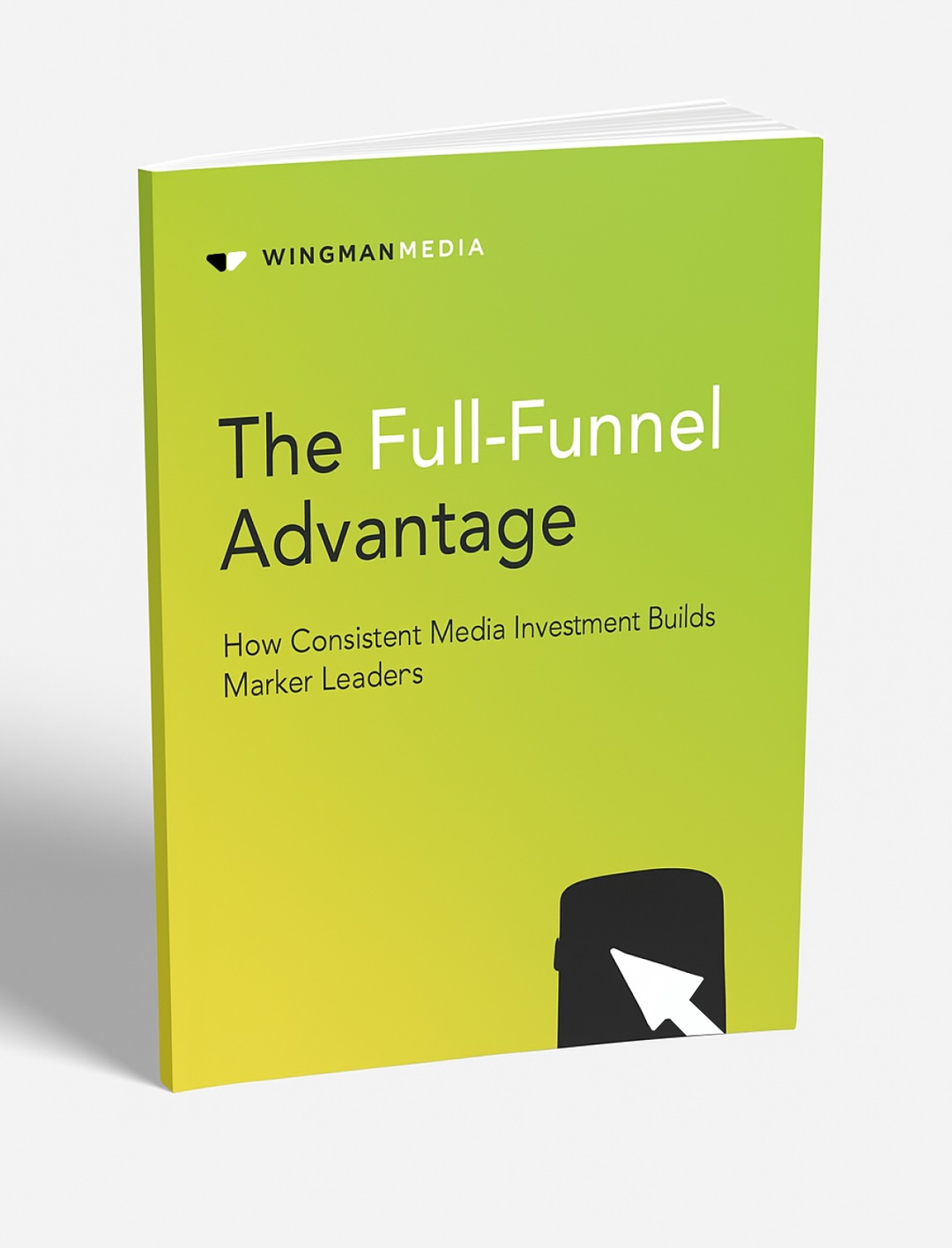
Discover all 5 thinking traps that may be sabotaging your growth and the 5 power moves to counter them. In our comprehensive guide, “The Full-Funnel Advantage: How Consistent Media Investment Builds Market Leaders” you’ll learn how top brands capitalize on key growth opportunities and outmaneuver competitors.
About Us
Wingman Media is an award-winning Media Buying and Media Planning Agency in Los Angeles, California. Our data-driven media campaigns help companies that sell niche products and services drive maximum response from all advertising channels – including CTV, broadcast television, programmatic display and video, paid social media, paid search, radio, and audio streaming.
Contact
310.302.9400